How Pordix Helps Build a Leaner AI Tool Stack
Software stacks rarely become complicated overnight. They grow one tool at a time. A business adds one app for content, another for customer support, another for documents, and a few more for tasks that may already overlap.
Over time, this can create higher costs, more logins, and workflows that feel harder than they should. The problem is not always the number of tools. It is whether each one still has a clear purpose.
A lean AI tool stack focuses on useful software, less overlap, and simpler daily work. The goal is not to remove everything. It is to keep the tools that solve real problems and cut the ones that add cost without enough value.
In this article, we will look at how businesses can review their current stack, reduce unnecessary software, and decide where focused Pordix tools may fit into a simpler setup.
Why AI Tool Stacks Become Bloated
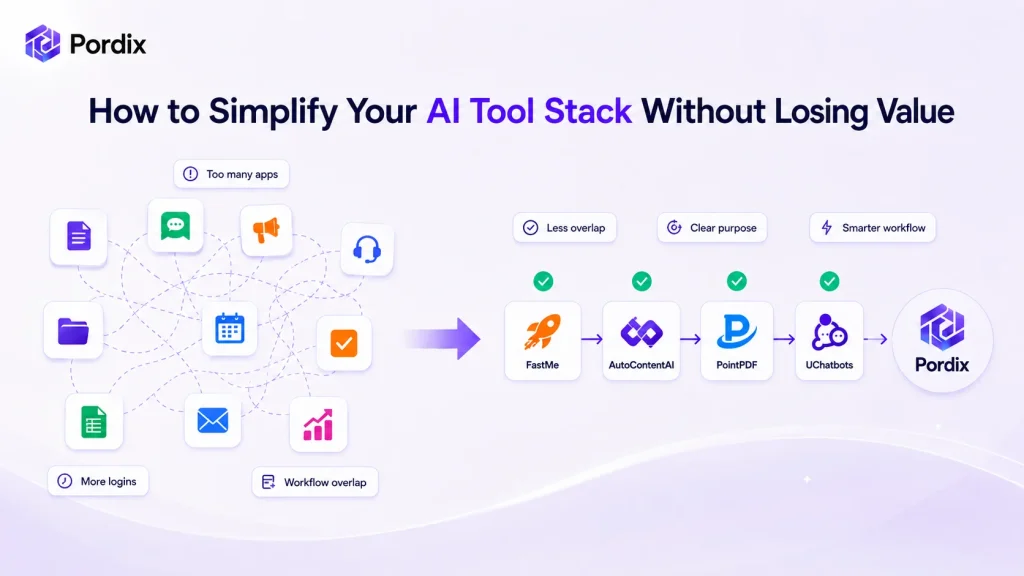
Most businesses do not build a crowded software stack on purpose. It usually happens over time. A new tool gets added for one task, another solves a short-term need, and a third is introduced because someone on the team prefers it.
The problem starts when those decisions are never reviewed. Old subscriptions stay active. New platforms begin to offer features that existing tools already provide. Teams may also use different apps for similar work, which creates more switching and less consistency.
Free trials can add to the issue. A tool may look useful at first, then become part of the monthly budget even after the original need has changed. As the stack grows, it becomes harder to see which products are essential and which ones remain out of habit.
This is how tool sprawl develops. It is rarely caused by one bad purchase. It is usually the result of many small software decisions that no longer fit together as well as they once did.
How to Find Waste and Overlap in Your Software Stack
Once a software stack starts to grow, the next step is not to cancel tools immediately. It is to understand what each one is actually doing.
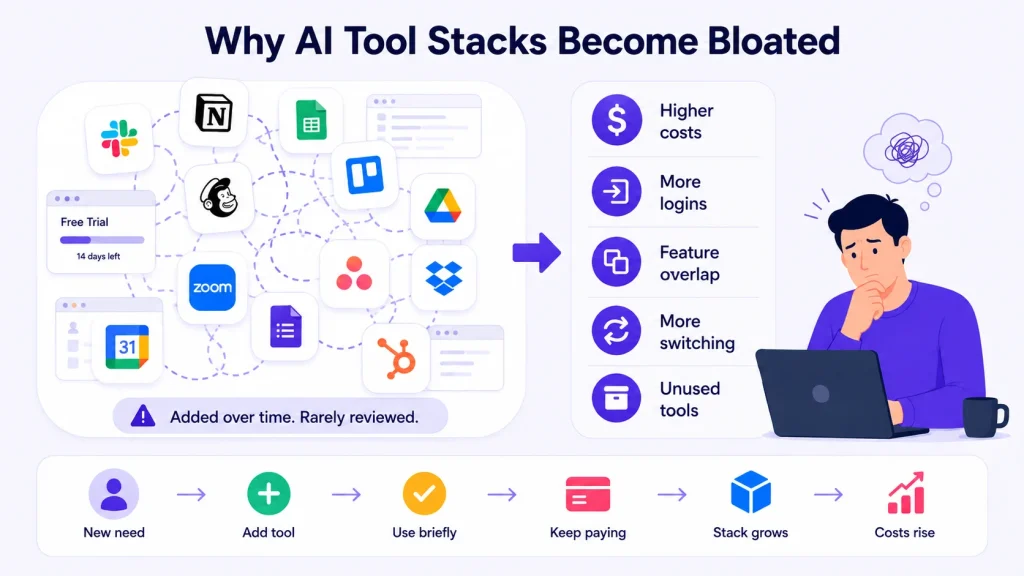
Start with a simple review of the tools your business pays for. Look at who uses them, how often they are used, and which tasks they support. This makes it easier to spot apps that were useful in the past but no longer match the way your team works today.
Overlap is another sign to watch for. Two or more tools may offer similar features, but that does not always mean one should be removed. The real question is whether each tool still provides enough unique value to justify its place.
Questions Worth Asking During a Software Audit
- What specific job does this tool perform?
- How often is it actually used?
- Does another tool already handle the same task?
- Would removing it interrupt an important workflow?
- Is the value still worth the current cost?
A clear audit gives you the information needed to make better decisions later. It separates useful software from tools that are simply adding cost, complexity, or duplication.
Build a Leaner Stack Without Removing Useful Software
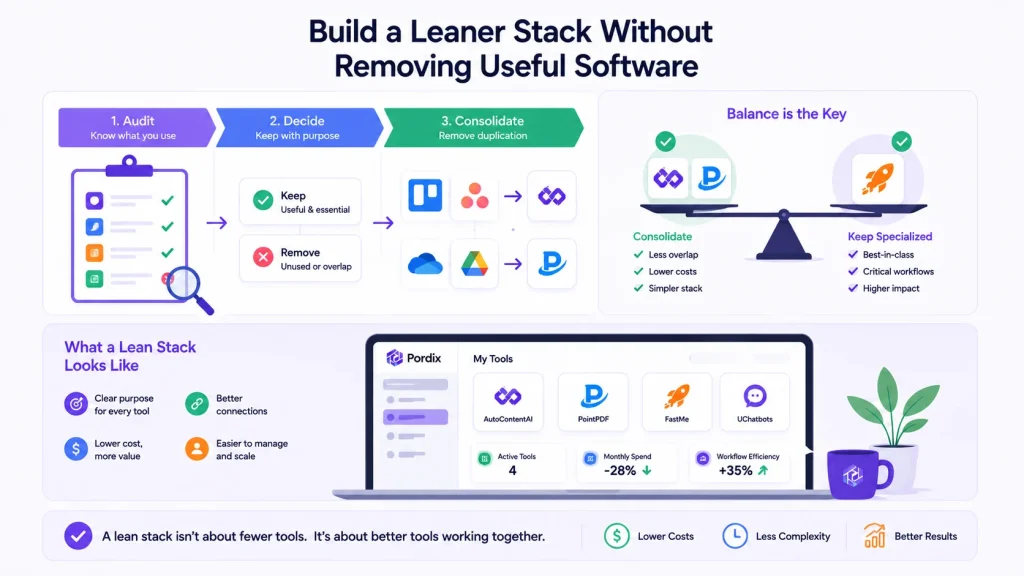
After the audit, the goal is not to cut tools unthinkingly. A lean stack should remove duplication without breaking the workflows that still depend on specialist software.
This is where SaaS tool consolidation needs judgment. If two platforms handle the same task, it may make sense to keep the one that is easier to use, more cost-effective, or better connected to the rest of the workflow. But if a dedicated tool performs an important job better than a broader platform, removing it can create more friction than savings.
The best stack is not always the smallest one. It is the one where every tool has a clear role and earns its place through regular use, useful features, and a real contribution to the workflow.
That makes consolidation less about chasing fewer subscriptions and more about creating a software setup that is easier to manage, easier to understand, and better aligned with how the business actually works.
Where Pordix Can Fit Into a Lean AI Tool Stack
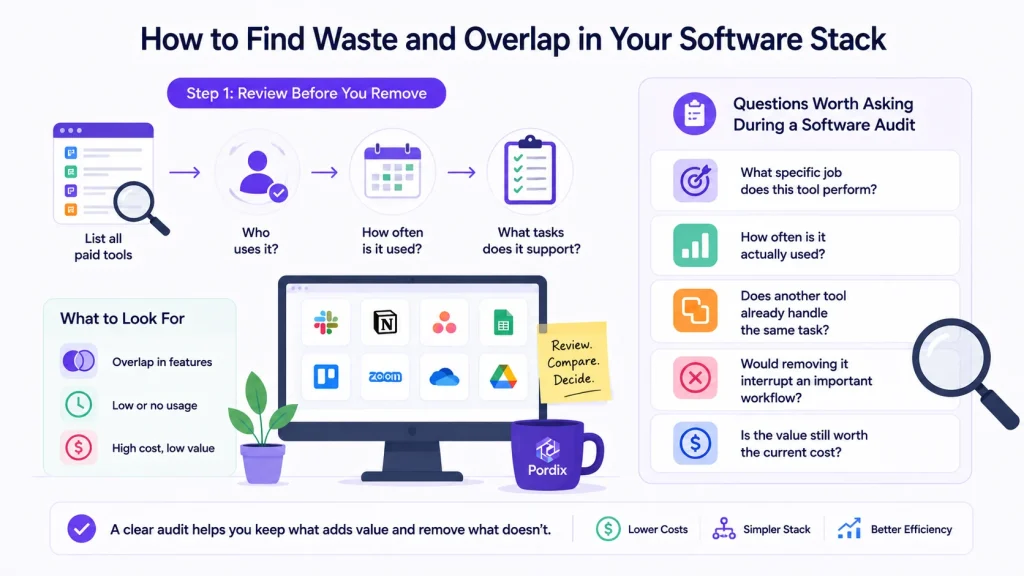
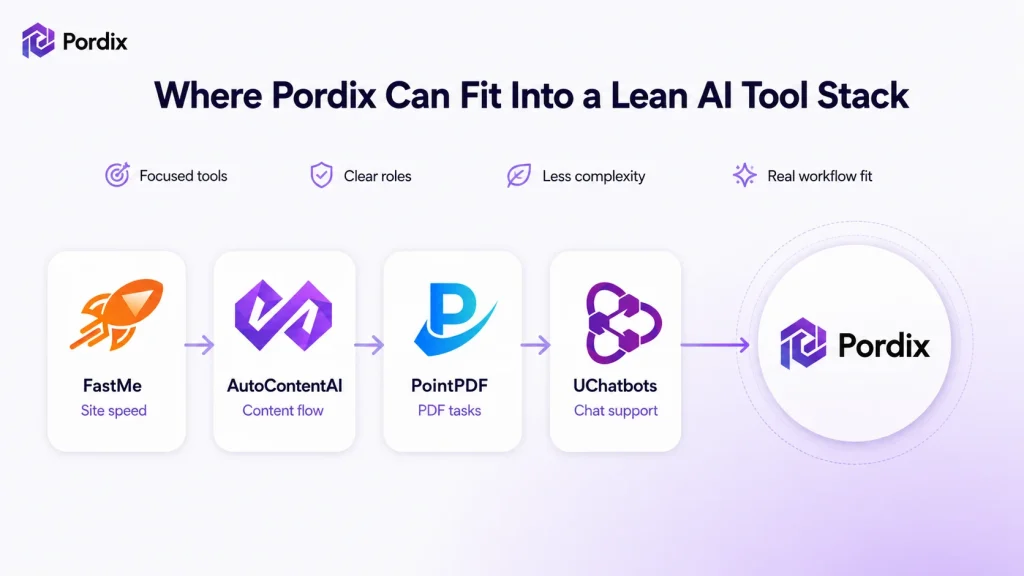
A lean AI stack works best when every tool has a clear role. Pordix supports this approach with focused products built for specific workflow needs.
The idea is not to use everything at once. It is to choose the tools that remove real friction without adding more complexity.
- FastMe: Helps improve website speed and performance, making it useful for businesses that want a faster, cleaner web experience.
- AutoContentAI: Supports content creation and publishing workflows, helping reduce the time spent on repetitive content tasks.
- UChatbots: Adds conversational automation for customer interactions, support, and lead engagement without relying on a large support stack.
- PointPDF: Simplifies PDF and document-related tasks, giving teams a focused way to handle document workflows without extra software.
For businesses trying to simplify their AI tool stack, Pordix can act as a focused layer rather than another oversized platform. The value comes from using only the tools that solve a real need.
How to Know Whether Your New Stack Is Actually Better
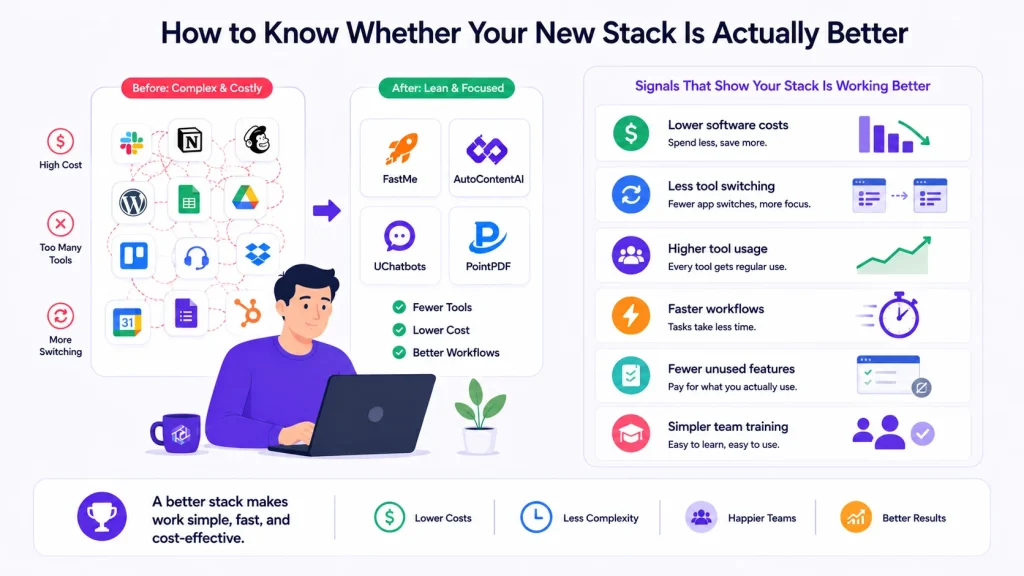
A leaner stack should improve daily work, not just reduce the number of subscriptions. The best way to judge it is to track what actually changes after consolidation.
Signals That Show Your Stack Is Working Better
- Lower software costs: Monthly spending should drop when unused or overlapping tools are removed. The savings should be clear without creating new workflow problems.
- Less tool switching: Teams should spend less time moving between apps to complete simple tasks. Fewer handoffs often make work feel faster and easier.
- Higher tool usage: The tools that remain should be used regularly. A smaller stack has more value when each product earns its place.
- Faster workflows: Repetitive tasks should take less time to complete. Delays caused by disconnected platforms should also decrease.
- Fewer unused features: Businesses should avoid paying for large feature sets they rarely touch. A focused tool can be more valuable when it solves the exact job required.
- Simpler team training: New users should find the stack easier to understand. Fewer overlapping platforms can reduce confusion and shorten onboarding time.
A stronger business software stack should feel simpler in practice. If the team can work faster, spend less, and understand each tool’s role, the consolidation is delivering real value.
Final Thoughts
A strong AI tool stack is not about using the fewest tools possible. It is about using the right ones for the work that actually matters.
Businesses get more value when every tool has a clear role, supports a real workflow, and earns its place through regular use. That can mean lower costs, less switching, and a setup that is easier for teams to manage.
Pordix can fit into that approach by offering focused tools for specific needs instead of forcing every task into one large platform. The goal should always stay the same: keep the software that helps the business work better and remove the complexity that does not.
Frequently Asked Questions
What is an AI tool stack?
An AI tool stack is the collection of AI-powered software a business uses across its daily workflows. It may include tools for content, customer support, documents, marketing, analytics, automation, and other business tasks.
How many AI tools does a small business really need?
There is no ideal number for every business. A better approach is to start with a small set of tools that solve clear problems, then add another only when there is a genuine workflow gap. Current small-business AI guidance also tends to favor a focused stack over collecting many lightly used tools.
How do I know if my software stack has too many tools?
Look for unused subscriptions, duplicate features, separate apps performing similar tasks, and frequent switching between platforms. These are common signs that the stack has grown beyond what the business actually needs.
Can SaaS tool consolidation reduce software costs?
Yes, especially when a business is paying for duplicate licenses, overlapping features, or products that are rarely used. However, SaaS tool consolidation works best when decisions are based on usage and business value rather than removing software to reduce the number of subscriptions.
Can Pordix help build a leaner AI tool stack?
Pordix can fit into a leaner stack when one of its focused tools replaces an unnecessary layer of software or fills a clear workflow gap. Businesses should choose the Pordix products that match their actual needs rather than adding every available tool to expand their stack.