
Your WordPress SEO Plugin Is Not Enough: What Modern Websites Need To Rank
You install a WordPress SEO plugin. You follow its recommendations, optimize your titles, and add keywords. Then you wait for your website to climb the rankings. But weeks or even months later, the results still feel slower than expected. This is where many website owners discover an important reality: SEO plugins are useful, but they were never designed to manage every part of website growth.
The problem isn’t that SEO plugins are ineffective. They offer real value: tech tuning, metadata management, search engine guidance. But modern WordPress SEO optimization takes more than adjusting settings. Successful websites need a full system. That means technical SEO, helpful content, consistent publishing, and workflows that cut down on repetitive tasks.
That’s why choosing the best SEO plugin for WordPress is only the beginning. The right plugin gives you a strong foundation. But sustainable growth comes from the tools and processes built around it. Today, you can pair SEO tools for WordPress with AI-powered tools. This streamlines content workflows, automates busywork, and frees your team up to focus on strategy, customers, and growth.
In this guide, we’ll look at why an SEO plugin alone isn’t enough. We’ll cover what these tools actually do, and how modern WordPress websites use AI automation to build a more scalable online presence.
What SEO Plugins Actually Do For WordPress Websites
SEO plugins are one of the first tools website owners reach for. They play a key role in creating a strong tech base. They simplify tasks that used to require coding knowledge. That makes it easier to manage how your website appears to search engines.
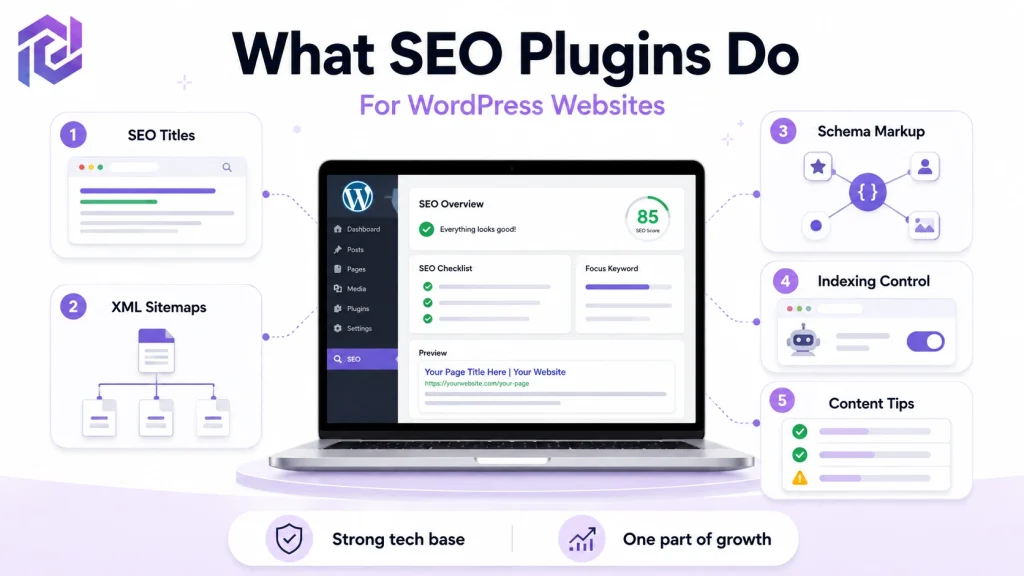
Most WordPress SEO plugins help with:
- SEO titles and meta descriptions: Optimize how pages appear in search results and improve click-through potential.
- XML sitemaps: Help search engines discover and understand your website’s structure.
- Schema markup: Add structured data that helps search engines interpret content and display enhanced results.
- Indexing controls: Manage which pages search engines should crawl, index, or ignore.
- Content optimization suggestions: Offer basic tips on readability, keyword usage, headings, and page structure.
These features make WordPress SEO plugins valuable, especially for tech tuning. But they only solve one part of the growth process. A plugin can improve a page that already exists. It can’t build your content strategy. It can’t automate your workflow. And it can’t create the systems your website needs to grow.
That is where modern websites are expanding beyond traditional SEO plugins. By combining SEO tools with automation and AI-powered solutions, businesses can reduce repetitive work, improve productivity, and create workflows that support long-term growth.
Why An SEO Plugin Alone Is Not Enough For Website Growth
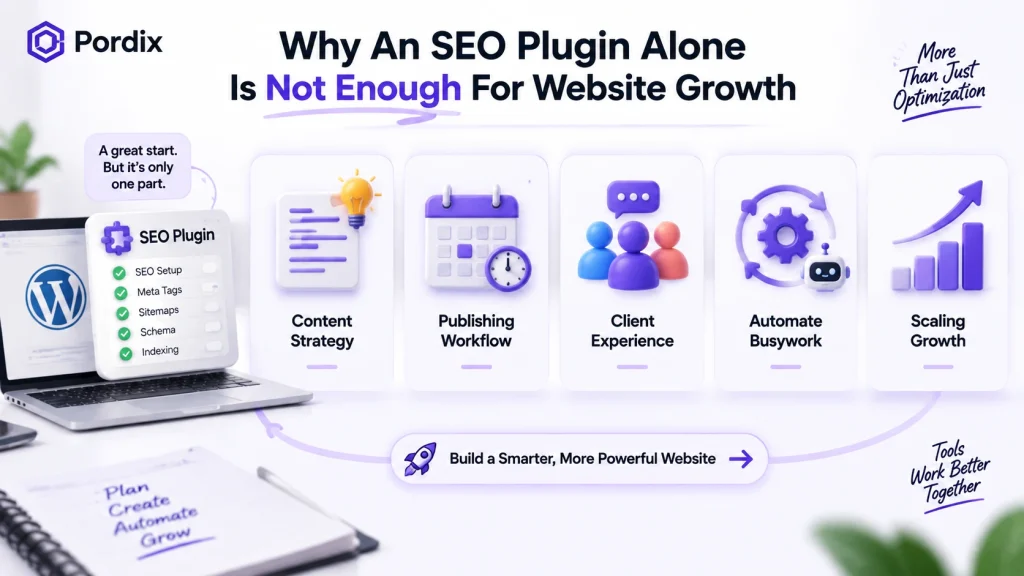
Installing an SEO plugin is a smart first step. But it’s only one part of building a successful WordPress website. These tools improve the tech setup. They can’t handle the bigger workflow needed to attract visitors, create content, engage clients, and scale operations.
A growing website needs more than optimized pages. It needs a system that connects content creation, automation, client support, and ongoing improvement.
What SEO Plugins Cannot Do Alone
- Build a complete content strategy: Plugins can’t spot your best opportunities or understand your audience’s real challenges.
- Maintain a consistent publishing workflow: Quality content takes research, planning, writing, and editing — well beyond plugin recommendations.
- Improve client experiences on their own: Traffic only pays off when you can engage and support visitors once they arrive.
- Automate the busywork: Content, customer chats, and files usually need dedicated automation tools.
- Scale with growth: More visitors means you need flexible systems that cut manual work.
A plugin can optimize what already exists. But it can’t build the entire engine behind sustainable growth. That’s why more teams are moving toward connected workflows — ones that pair plugins with AI-powered automation.
The Modern WordPress Growth Stack: SEO Plugins + AI Automation Tools
Most teams start their WordPress journey the same way: a website, a theme, and an SEO plugin. That’s usually enough at first. But as the site grows, new challenges show up. Content needs to publish more often. Customer questions increase. Files pile up. Manual tasks start eating into valuable time.
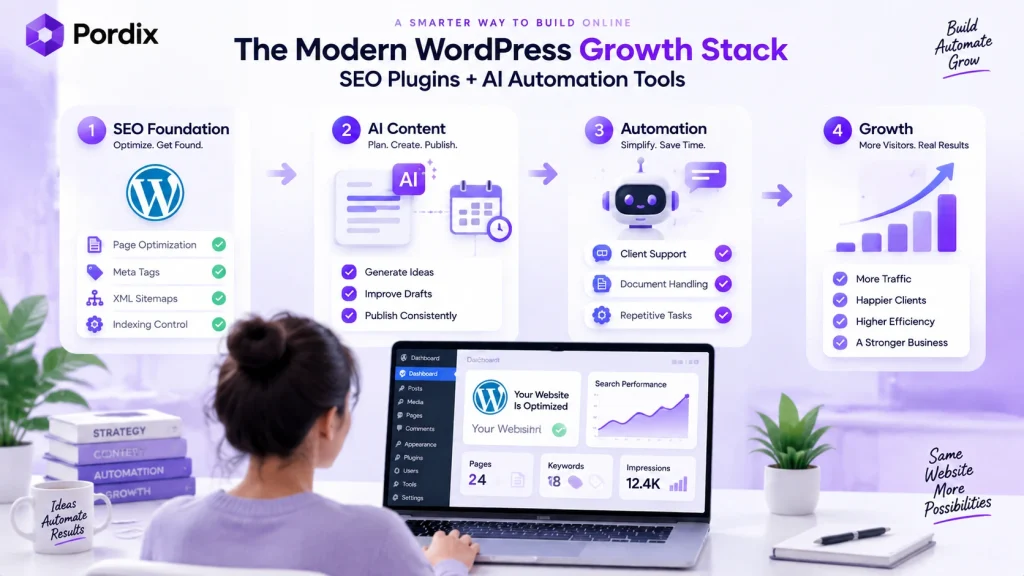
This is where modern teams shift their approach. Instead of expecting one tool to do everything, they build a workflow. Different tools solve different problems. SEO plugins keep handling the tech base. AI automation tools manage what happens behind the scenes.
SEO Plugins Handle The Search Foundation
SEO plugins remain a core part of any WordPress website. They manage the tech side of SEO — page structure, metadata, and indexing settings that search engines use to understand your content.
But their role is mainly optimization. They prepare your website for search engines. They don’t create your content strategy. They don’t manage your publishing process or the operational work that keeps a website growing.
AI Tools Make Content Workflows More Efficient
Creating useful content is one of the biggest challenges teams face. A website can have great SEO settings. But without fresh, helpful content, there’s little chance to reach new audiences. AI SEO tools help speed up parts of this process. They generate ideas, organize content plans, improve drafts, and cut the repetitive tasks that slow teams down.
For example, AI content tools like AutoContentAI support the content workflow. They help you spend less time on busywork and more time on quality, strategy, and audience needs.
AI Tools Make Content Workflows More Efficient
SEO plugins remain a core part of any WordPress website. They manage the tech side of SEO — page structure, metadata, and indexing settings that search engines use to understand your content.
But their role is mainly optimization. They prepare your website for search engines. They don’t create your content strategy. They don’t manage your publishing process or the operational work that keeps a website growing.
Automation Tools Help Businesses Handle Growth
As you grow, the real problem usually isn’t getting more visitors. It’s managing everything that comes with growth. More customers mean more conversations, more documents, and more repetitive work. Automation tools help by simplifying tasks like client chats, document handling, and daily operations. They don’t replace your existing stack. They add efficiency where it’s needed most.
This is the approach behind Pordix: building specialized AI tools for specific problems. Some teams need content automation. Others need client chats or document tools. The right workflow depends on what you actually need. A modern WordPress website isn’t built around a single plugin anymore. It’s built around tools working together — helping you create, manage, and scale your online presence.
How AI Tools Are Changing WordPress SEO Workflows
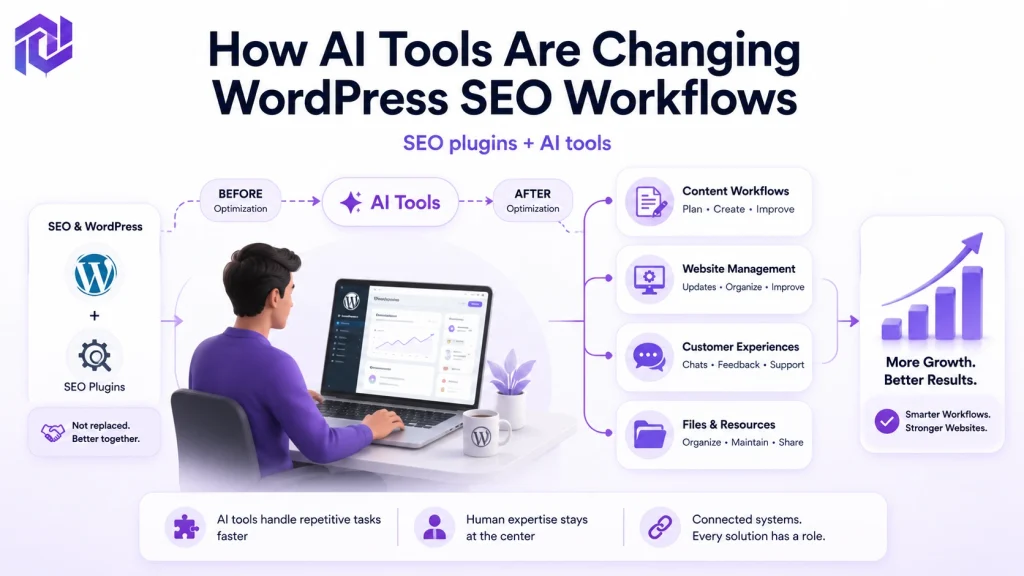
SEO plugins have made WordPress optimization easier. But growth today takes more than technical settings. You now manage content, customer chats, website resources, and daily tasks. Automation can lighten the load in all of these areas.
AI-powered tools change these workflows by handling repetitive tasks faster, while keeping human expertise at the center. They don’t replace SEO plugins. They work alongside them, supporting what happens before and after optimization.
Where AI-Powered Workflows Can Help Modern Websites
AI tools can support you with:
- Content workflows: Helping teams plan, create, and improve content more efficiently.
- Website management: Supporting smoother updates, organization, and performance improvements.
- Customer experiences: Managing conversations, feedback, and support requests at scale.
- Files and resources: Making it easier to organize and maintain helpful information.
The key shift: modern websites aren’t built around one optimization tool anymore. They rely on connected systems, where each solution handles a specific part of the growth process.
That raises an important question. If SEO plugins and AI automation tools solve different problems, how should businesses actually use them together?
Best SEO Plugin for WordPress: Choosing The Right Tools For Your Business
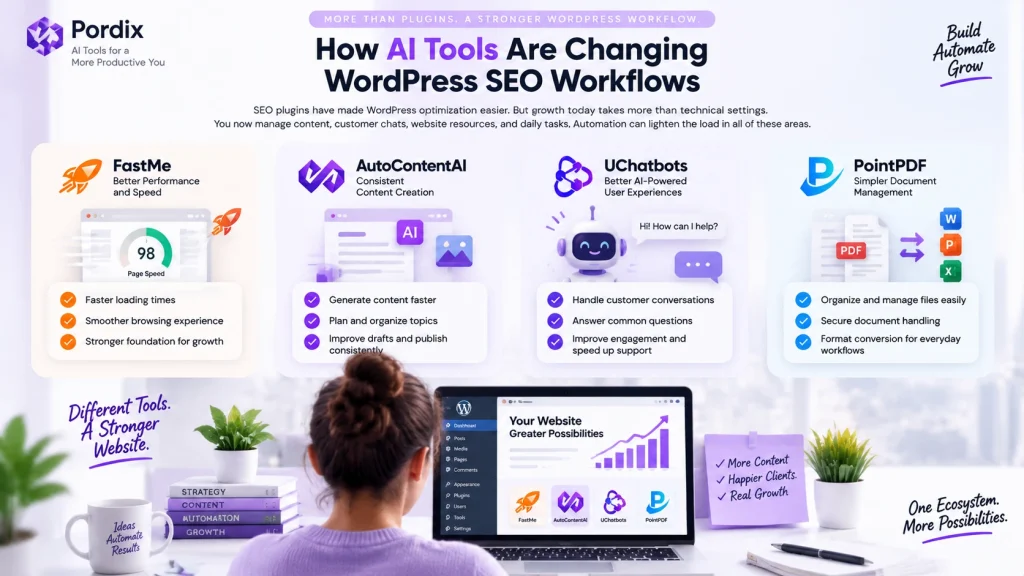
Finding the best SEO plugin for WordPress is an important step. But it’s only one part of building a website that performs well. Plugins handle the tech setup. Modern websites also need speed, steady content, AI-powered chat, and solid file handling. Instead of hunting for one tool that does everything, a smarter approach is building a flexible workflow. Each solution covers a different part of the website experience.
For Websites That Need Better Performance And Speed
Great content and strong SEO can still fall flat if your site loads slowly. Page speed and responsiveness shape how users interact with a site — and whether they stick around.
FastMe helps you improve website speed and build a smoother browsing experience. This gives visitors faster access to your content, while building a stronger foundation for growth.
For Businesses That Need Consistent Content Creation
Creating valuable content is one of the biggest challenges for growing teams. Even with the right SEO plugin, teams still need a reliable way to plan topics and keep publishing momentum going.
AutoContentAI helps you generate content faster through AI-powered assistance. Instead of losing time to repetitive content tasks, teams can streamline their workflow while keeping their own voice and ideas at the center.
For Websites That Want Better AI-Powered User Experiences
Search behavior is evolving. Users increasingly expect quick, direct answers when looking for information. Websites now need to think beyond traditional search — and build experiences that help visitors find answers faster.
UChatbots helps you create AI-powered chat experiences that make information easier to find. Whether it’s answering common questions or guiding users to what they need, AI-driven interactions can improve engagement and speed up support.
For Businesses Managing Important Documents And Information
Many teams rely on documents for resources, client files, reports, and internal records. As digital information grows, managing these files securely becomes more important.
PointPDF simplifies file workflows through secure file handling and format conversion. This helps you handle digital files more easily, with better control over your data.
The right setup isn’t about collecting the most tools. It’s not about picking one platform for every task, either. It’s about choosing solutions that support where your business needs the most help. A strong SEO plugin provides the foundation. Specialized tools improve performance, content, AI interactions, and document management as your website grows.
Final Thoughts: Your Website Needs More Than Just An SEO Plugin
The best SEO plugin for WordPress helps create a strong tech base. But successful websites need more than optimization settings. Growth comes from combining SEO, quality content, performance, AI-powered experiences, and efficient workflows.
There’s no single tool that does everything — and that’s fine. What matters is building a smarter system, where each solution covers a specific need. That’s how you improve visibility, save time, and give your audience a better experience.
As WordPress websites keep evolving, the businesses that combine the right tools with the right strategy will be the ones best positioned to grow, adapt, and scale.
Frequently Asked Questions
What is the best SEO plugin for WordPress?
The best SEO plugin for WordPress depends on what your website needs. A good SEO plugin should make important tasks easier, such as managing metadata, sitemaps, schema, and technical settings. However, plugins work best when combined with strong content, website performance, and a complete SEO workflow.
Are SEO plugins enough to rank a WordPress website?
No. SEO plugins can help optimize technical elements, but they do not replace helpful content, fast performance, user experience, and consistent publishing. A successful WordPress SEO strategy usually requires multiple tools working together, from optimization to content creation and website improvements.
Can I improve WordPress SEO without using multiple complicated tools?
Yes. The goal is not to collect as many tools as possible but to create a workflow that solves specific problems. A focused ecosystem of tools can help manage different areas, such as website performance, content production, and automation, without unnecessary complexity.
How does website speed affect WordPress SEO?
Website speed influences user experience, engagement, and how efficiently search engines can access your pages. Optimizing images, caching, code performance, and technical elements can help create a faster website. Tools like FastMe are designed to support WordPress performance improvements alongside your SEO efforts.
How can I create SEO-friendly content consistently on WordPress?
Consistent SEO content requires planning, research, optimization, and regular publishing. AI-powered content tools like Autocontent Ai can help reduce repetitive work, but human editing, fact-checking, and brand expertise remain important for producing valuable content.
Do I need separate tools for SEO, content, and website optimization?
Not necessarily. Different websites have different needs. Some businesses may only need an SEO plugin, while others may benefit from a broader workflow that includes performance optimization, content automation, customer engagement, and document tools depending on their goals.