
Learn How Uchatbot Helps Turn Static FAQs into Conversational Ai
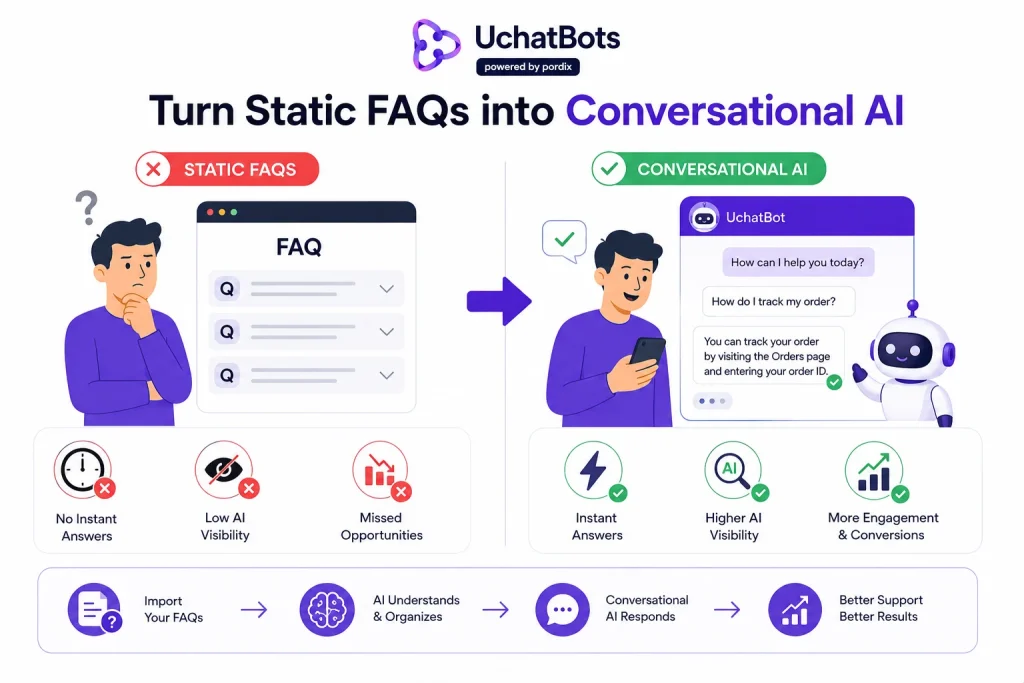
Struggling to improve AI search visibility while delivering faster customer support? Traditional FAQ pages are no longer enough for today’s AI-powered search experience. Users expect instant, conversational answers, while platforms like Google AI Overviews and ChatGPT prioritize well-structured, answer-focused content. Businesses that continue relying on static FAQs risk missing valuable opportunities to engage visitors and appear in AI-generated search results.
Uchatbot helps solve this challenge by transforming static FAQs into intelligent conversational AI experiences. Powered by Answer Engine Optimization (AEO), it enables businesses to automate customer support, deliver accurate answers in real time, and make website content easier for AI search engines to understand, cite, and surface.
In this guide, you’ll learn how Uchatbot combines conversational AI with AEO automation to improve customer engagement, increase visibility, and support long-term organic growth.
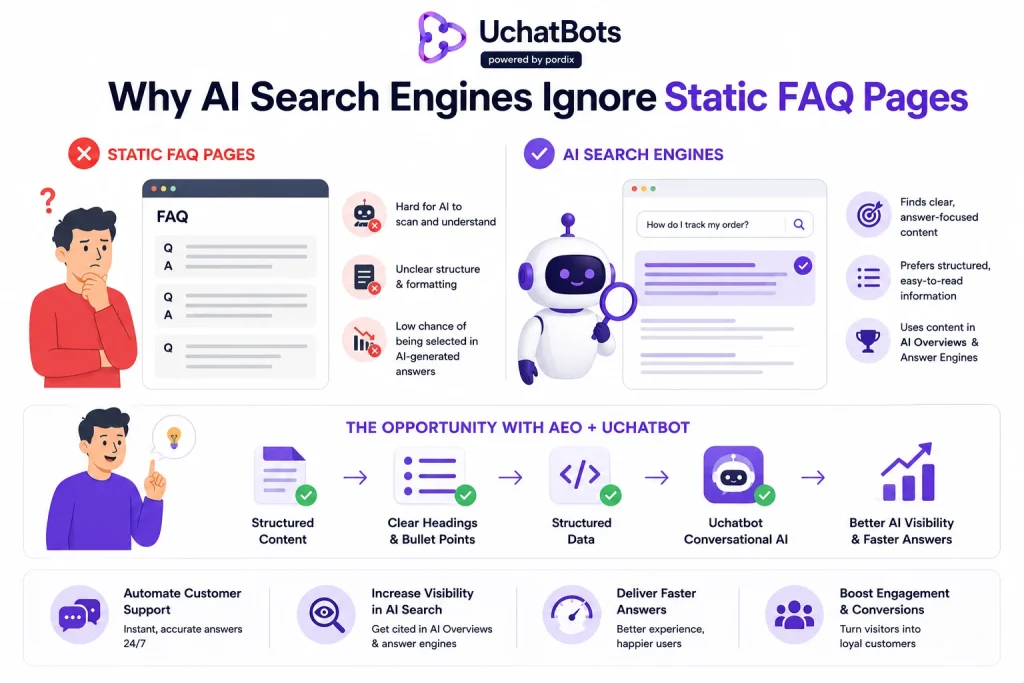
Why AI Search Engines Ignore Static FAQ Pages?
AI search engines process content differently from human readers. Instead of reading every paragraph from start to finish, they look for well-structured, easy-to-understand information that directly answers user questions. Long blocks of text with unclear formatting make it more difficult for AI systems to identify key information, reducing the chances of your content being selected for AI-generated responses or answer engines.
This creates a valuable opportunity for businesses that embrace Answer Engine Optimization (AEO). While many older websites still rely on outdated FAQ pages and unstructured content, well-organized pages with clear headings, concise answers, bullet points, and structured data are easier for AI search engines to understand. By combining these best practices with Uchatbot, businesses can transform static content into conversational AI experiences that improve customer support automation, increase visibility in AI search, and deliver faster answers to users.
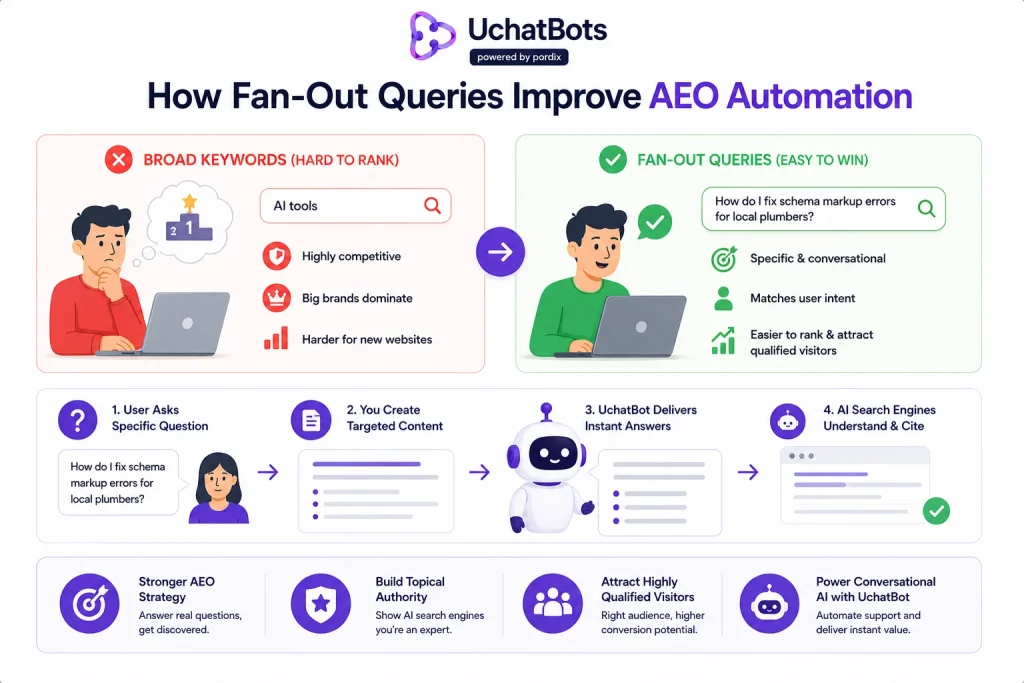
How Fan-Out Queries Improve AEO Automation?
Competing for broad keywords like “AI tools” or “marketing software” can be challenging, especially for newer websites. Established brands often have stronger domain authority and years of topical content. Instead of targeting highly competitive terms, focus on fan-out queries—specific, conversational questions that closely match what users ask AI search engines and voice assistants.
Fan-out queries are detailed, long-tail searches that reflect clear user intent. For example, instead of searching for “local SEO,” a user might ask, “How do I fix schema markup errors for local plumbers?” By creating content that answers these questions directly, businesses can strengthen their Answer Engine Optimization (AEO) strategy, build topical authority, and attract highly qualified visitors. When combined with Uchatbot, these targeted answers can also power conversational AI experiences that improve customer support automation and help users find the information they need more quickly.
3 Ways to Turn Static FAQs into Conversational Ai
AI search engines are more likely to surface content that is clear, well-structured, and easy to understand. Instead of relying on long, unorganized paragraphs, they prioritize pages with concise answers, logical headings, and structured information that matches user intent. By formatting your content for Answer Engine Optimization (AEO), you can make it easier for AI systems to identify, understand, and reference your content.
Follow these three practical steps to improve your chances of appearing in AI-generated answers and increasing your visibility across modern search experiences.
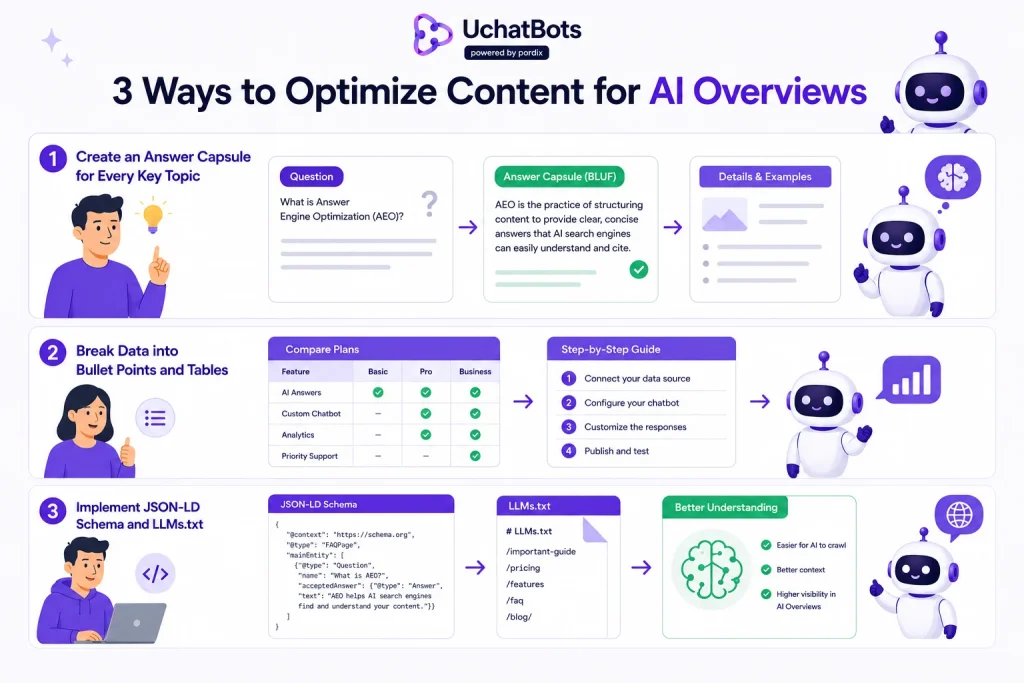
Step 1: Create an Answer Capsule for Every Key Topic
Start each section with a clear, direct answer instead of a long introduction. A simple approach is the Bottom Line Up Front (BLUF) method, where you answer the reader’s question in the first few sentences before providing additional context. This concise summary, often called an answer capsule, helps both readers and AI search engines quickly understand the main point of the section.
After presenting the direct answer, expand on it with supporting details, practical examples, data, or case studies. This structure improves readability, supports Answer Engine Optimization (AEO), and makes your content easier for AI-powered search engines to interpret and reference.
Step 2: Break Data into Bullet Points and Tables
Well-structured content is easier for both readers and AI search engines to understand. When comparing products, features, or pricing, use HTML tables to organize information clearly. For step-by-step instructions, use numbered lists or bullet points to present each action in a logical order. This structured format improves readability and helps AI systems identify key information more efficiently.
Clear formatting also supports Answer Engine Optimization (AEO) by making your content easier to interpret and reference in AI-generated responses. Combined with descriptive headings and concise answers, structured content can improve your visibility across modern search experiences while creating a better experience for your audience.
Step 3: Implement JSON-LD Schema and LLMs.txt
Help AI search engines understand your content by using structured data. Add FAQPage and Article schema to your most important pages so search engines can better identify your content, questions, and answers. This extra context can improve how your pages are interpreted and displayed in search results.
You can also create an LLMs.txt file to guide AI systems toward your most important content. While support for LLMs.txt is still evolving, it can help organize key information for AI tools that choose to use it. When combined with structured content and Answer Engine Optimization (AEO) best practices, these technical improvements make your website easier for both search engines and AI-powered platforms to understand.
How Uchatbot Automates Customer Support and AEO
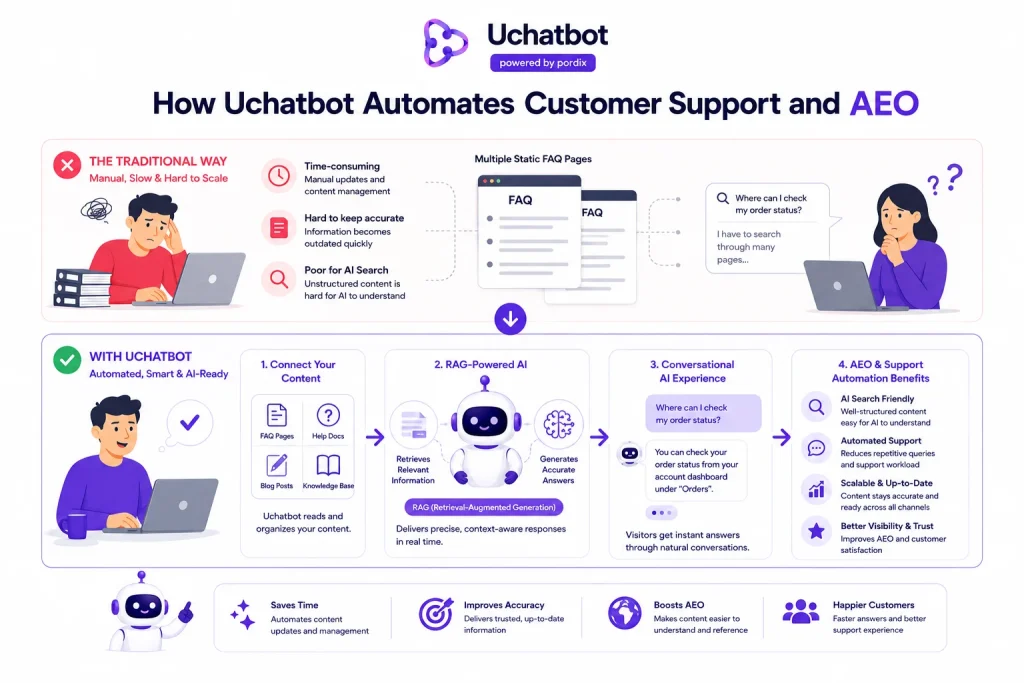
Managing and updating hundreds of FAQ pages manually takes time and effort. As your website grows, keeping content accurate, well-structured, and ready for AI search becomes even more challenging. Uchatbot, powered by Pordix, helps simplify this process by turning static FAQs into interactive conversational AI experiences.
Using Retrieval-Augmented Generation (RAG), Uchatbot retrieves relevant information from your existing content to provide accurate, context-aware answers in real time. Instead of asking visitors to search through multiple pages, it helps them find the information they need through natural conversations. It also supports Answer Engine Optimization (AEO) by making your content easier to organize, manage, and present across AI-powered search and customer support channels.
Conclusion: Scale Customer Support with Uchatbot
Static FAQ pages no longer meet the expectations of today’s AI-powered search experience. Users want quick, accurate answers, while AI search engines favor content that is well-structured, conversational, and easy to understand. By combining Answer Engine Optimization (AEO) with conversational AI, businesses can create a better experience for both users and modern search platforms.
Uchatbot helps make this transition simple. It transforms static FAQs into intelligent conversations, supports customer support automation, and helps organize your content for AI-powered search. As part of a modern content strategy, Uchatbot powered by Pordix can improve customer engagement, streamline support, and strengthen your long-term digital presence. Start building AI-ready content today and create a website that’s prepared for the future of search.
Frequently Asked Questions
Why choose Uchatbot over a traditional FAQ page?
Traditional FAQ pages require visitors to search for answers manually. Uchatbot turns that same information into interactive conversations, helping users find answers faster through natural language. This creates a better customer experience, supports customer support automation, and aligns your website with modern AI search behavior.
Can Uchatbot help my website appear in AI-powered search results?
While no platform can guarantee placement in AI-generated search results, Uchatbot supports Answer Engine Optimization (AEO) by organizing your knowledge base into conversational, well-structured content. Combined with strong SEO, structured data, and high-quality content, this can improve your website’s visibility across modern AI search experiences.
What are fan-out queries in AEO?
Fan-out queries are detailed, conversational questions that reflect specific user intent. These long-tail searches are often less competitive than broad keywords and help businesses attract highly qualified visitors. Creating content around these questions can strengthen topical authority and support both SEO and Answer Engine Optimization (AEO).
How does Uchatbot improve customer support automation?
Uchatbot transforms static FAQs into conversational AI experiences that provide instant, context-aware answers to customer questions. Instead of searching through multiple pages, visitors can interact with an AI assistant that retrieves relevant information from your existing content, improving response times and overall customer engagement.
What is Pordix and how does it help with automation?
Pordix is a premier AI automation SaaS tool provider that builds advanced workflow solutions. Pordix creates powerful software like Uchatbot AI and FastMe. These specialized tools help growing businesses automate their technical SEO, optimize web performance, and easily scale customer lead generation.